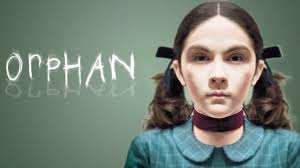
In 2009, Orphan, a rollercoaster ride with a twist that few viewers saw coming, became something of a cult favourite in the horror genre. (Say it with me, you didn’t either.) Now, more than ten years later, Isabelle Fuhrman is back in the prequel Orphan: First Kill as Esther, prepared to wreak more havoc on unwary families who take on far more than they bargained for.
Esther is this time pretending to be Tricia Albright, the kidnapped daughter of affluent Americans Allen and Tricia Albright (Julia Stiles and Rossif Sutherland). This begins yet another story of changing identities, plot twists, and violence.
David Coggeshall wrote the script for First Kill, which sees The Boy director William Brent Bell taking over. The official summary is as follows: Although Esther’s secret is now out, there is more to the insane young girl than first appears.
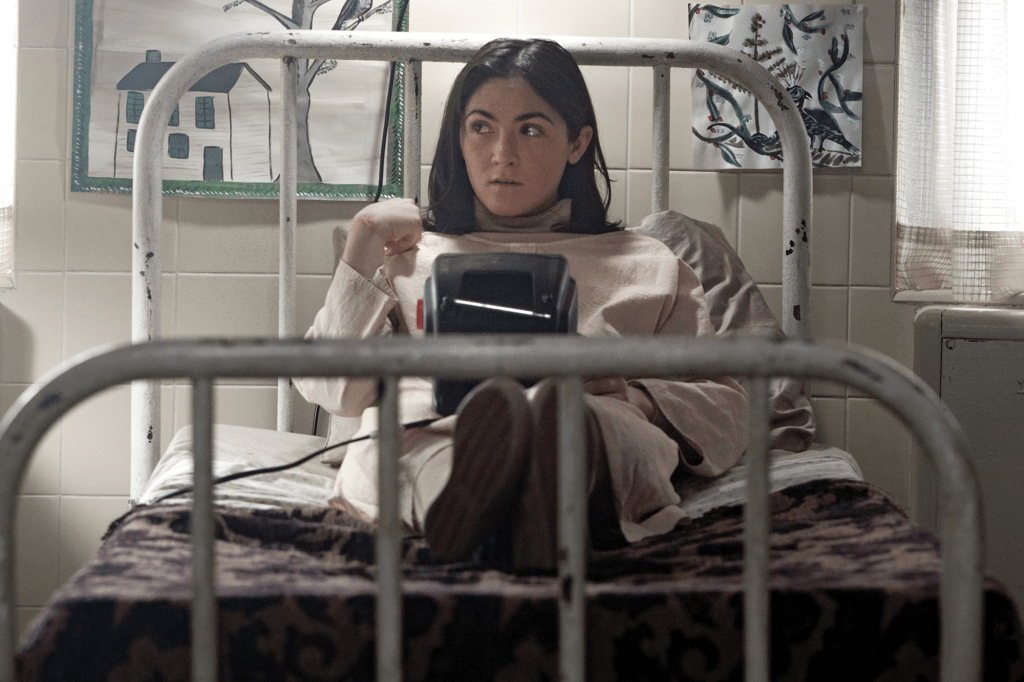
In order to hide her identity while evading capture, Esther assumes the identity of a lost American child whose mother is the matriarch of one of the richest families in the country. Will Esther’s need for blood sever the close links to the family, or will she learn that even a mother will go to great lengths to protect her children?
With a delectably trashy twist, “Orphan: First Kill” surpasses its predecessor.
To say that the new Orphan prequel’s amorality is refreshing would be an exaggeration, but not by much. The horror film Orphan: First Kill, which was directed by William Brent Bell, is largely devoid of contemporary pretences. No real effort is made to add pseudo-sociology to the film’s body count as an immediate mea culpa.
We are not pounded over the head with a concept that has long been inherent to the genre, like trauma, in order to satisfy our blood lust. Lean and cruel, Orphan: First Kill is at least unafraid of its trashiness, if not entirely aware.
First Kill begins with the twist that made the previous movie, 2009’s Orphan, so wonderful. The twist in this movie, which I shall cover in this review, manages to top that one. Your spoiler alert is now active.
Leena, played by Isabelle Fuhrman, serves as the franchise’s protagonist. She is the Jason or Freddy of this series, but First Kill in especially prioritises her perspective, making her the unofficial protagonist.
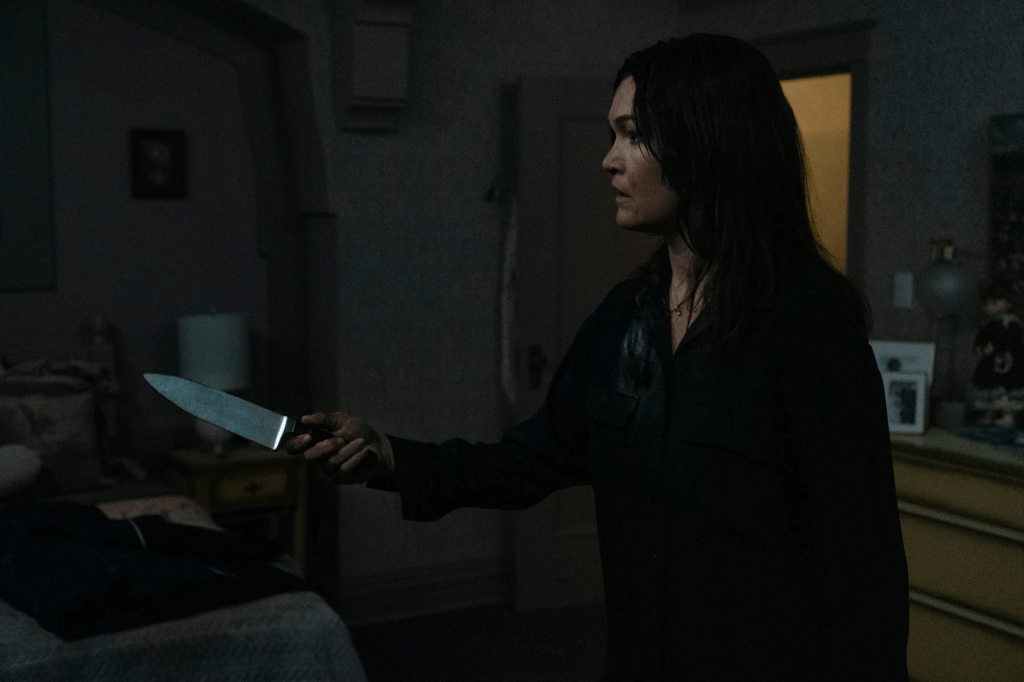
To name someone who uses her bare hands to kill and sneaks a dead mouse into her adoptive mother’s smoothie a “antihero” seems weird, but here we are. Leena is essentially a living Chucky doll. A
staff member at the Estonian mental institution where she is being confined at the beginning of the movie says that she has a “gland condition” that results in “proportional dwarfism,” which is why she looks like a toddler.
He says, “Leena uses her affliction as much as she suffers from it.” She’s a particularly skilled con artist. As we discovered in the previous film, she is very skilled at slipping into people’s lives. (The shock was that the entire time her adoptive family and the audience were led to believe she was a child, she was actually an adult.)
After breaking out of the facility in the style of Michael Myers, Leena is portrayed by Fuhrman (who is actually 25) with mercurial nuance. Leena practically spits and claws her way through the movie.
She has the same boogeymen-like power as him to disappear from view before appearing out of nowhere, as she does before maiming the art therapist whose car she hid in to get away. She searches the internet for missing children and, wouldn’t you know it, finds she’s a ringer for a missing youngster out of Darien, Connecticut, called Esther.
As if apparent teleportation wasn’t ridiculous enough. Leena decides to change into Esther in order to leave her country/situation, and all it takes is a few ribbons to hide her decidedly mature hesitation marks.
In order to bring what we assume to be her long-lost child of about four years home to Tricia (Julia Stiles opulent)’s estate, which also happens to contain Fabergé eggs and an unauthorised rat (though it is rather clean and cute vermin; guess they just make them differently in Connecticut), Tricia swings by Russia.
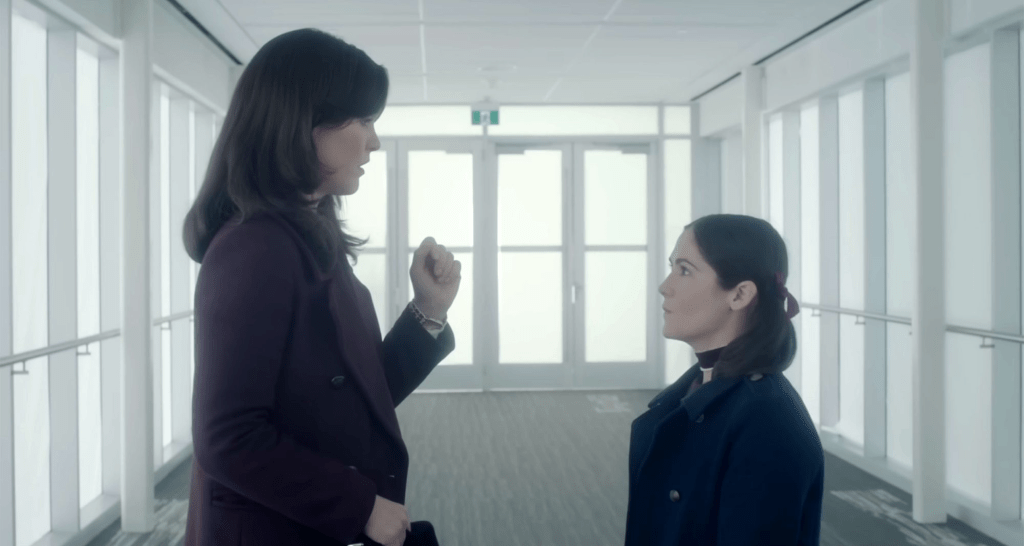
Leena-turned-Esther is up to her usual antics, or since this is a prequel, I guess they are new antics that she will soon repeat, including watching her parents make out, yearning for her father figure Allen (who is, to be fair, the incredibly Zeddy Ross if Sutherland), and berating her brother. She learns about Esther through her journal and plays ominous notes on the piano that properly express her rage.
Leena erred in her estimation, presuming Esther really did go missing. As it turns out, Leena chose the best mother to place her in the motherfucking incorrect spot.
Tricia, who assisted her son Gunnar (Matthew Finlan) in covering up his sister’s death and then reporting her missing, claims that Esther is not missing but rather deceased as a result of “some sibling crap that went too far.” (This story aspect unquestionably drew inspiration from one of the 26-year-old JonBenét Ramsey conspiracy theories.)
Tricia, then, was always aware of Leena’s con, but she nevertheless participated out of duty to her family. I laughed at this revelation. It made me smile even more than I did when the incredibly ridiculous twist from the previous movie was revealed.
When a movie deceives you so artfully and then, after realising it did, makes a quick shift to fix its problem, it’s like getting a dopamine boost. What a situation it is in. It is obvious that Tricia requires Leena’s Esther persona far more than Leena does. The apparent reunion of Esther mends a long-broken family.
Tricia remarks regarding her relationship with Allen, “It seems like when we got Esther back we got ourselves back too.” Happy life, happy husband. Tricia tells Leena, “You selected this part, and now you’re going to fucking play it.” Leena, who does not want to return to the hospital where she was held captive, goes along with the plan.
It turns out that LEENA chose the appropriate mother to place her in the incorrect mother-fucking position.
This leads to a really meagre dual-scamming plot, which quickly falls apart because Tricia, no matter how strict and demanding she may be (and Stiles is so adept at capturing a dedicated mother/lying schemer duality), is no match for Leena’s psychopathy. Mega-grift can only last so long until Tricia and Allen’s house falls into decay once more.
Prior to it, though, Stiles utters some amazing lines, such as “Well, if you’ll excuse me, I’m going to go upstairs and fuck my husband,” and “All macaws are parrots, but not all fucking parrots are macaws,” in response to Leena’s misunderstanding of the circumstances surrounding Esther’s life. This is a conversation that begs to be quoted in the future by admirers.
The streaming version of Orphan: First Kill, which was released concurrently in theatres and on Paramount Plus, feels like it belongs there. The Orphan: First Kill cult will grow thanks to streaming.
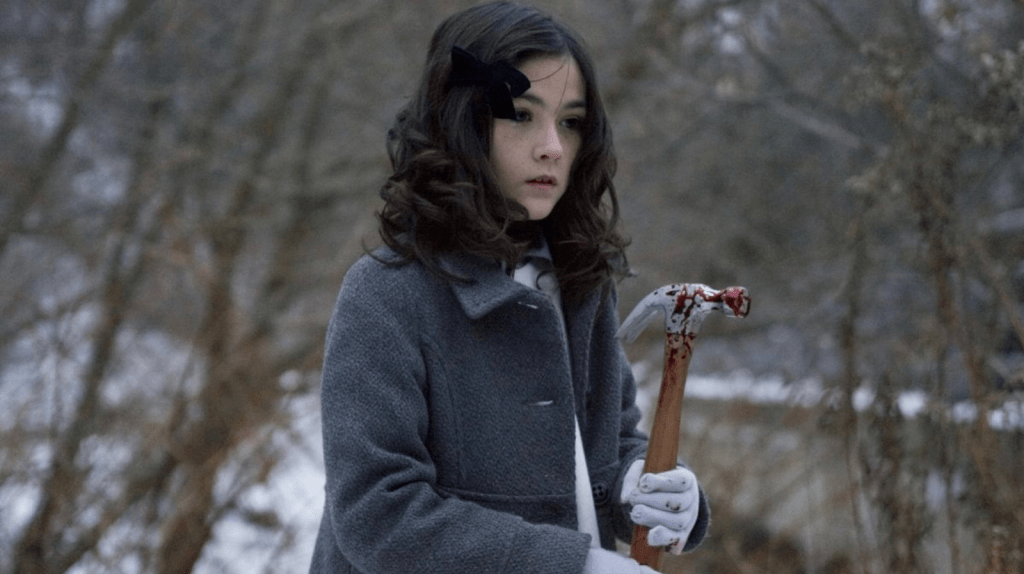
First Kill has some interesting shots that capture Leena’s entry through Esther’s dollhouse and some poetic shots of Leena leaving bloody fingerprints on the piano she plays after striking her therapist with a type iron, despite the fact that its crudeness placed it firmly in the realm of b movies.
It makes references throughout, but never more so than at the film’s climax, which would only be a more overt allusion to the domestic thriller The Good Son if Macaulay Culkin himself appeared to assist in the resolution of the plot.
Gunnar threatens Leena with deportation, refers to her as a “illegal immigrant,” and says, “This is America—people like me matter.” Gunnar and Tricia both refer to Leena as a “freak” (a “deformed freak” and a “mutant grifter,” in the words of her would-be mother). First Kill’s xenophobia and ableism serve more to emphasise its status as exploitation-cinema nostalgia than to impart knowledge.
This family was screwed long before they ever brought their new pet home, much like the Peltzers in Gremlins. I’m not sure if the movie disagrees with Tricia when she tells Leena, “You’re a monster,” but you can bet your bottom dollar that Leena wins in the end. Being a monster is advantageous in this genre.
 Hollywood Movie